
In a highly competitive B2B environment, field sales prospecting represents a major challenge to establish your company’s presence, gain market share, and sustain your commercial activity.
Yet, prospecting presents numerous challenges for your salespeople: difficulty identifying and targeting the right prospects, lack of time and organization… Your sales team must constantly balance efficiency and productivity.
In this article, discover how digital tools can support them throughout their prospecting missions.
1. Upfront: Help Your Salespeople Prepare Their Prospecting with Digital Tools
Preparation is the key to successful prospecting.
Digital tools provide a solid foundation by offering solutions to better target, plan, and personalize sales approaches.
- Identifying and targeting the right prospects
The basis of successful prospecting lies in a deep understanding of your prospects, using fine segmentation and relevant targeting. Before any contact, it is essential to identify high-potential prospects by analyzing specific criteria: industry, company size, turnover, issues detected during your research…
Whether through your sales or marketing teams, take the time to collect as much information as possible about your prospects, especially via their website and social media accounts, to identify their needs and how your products can meet them.
A digital tool such as a CRM (Customer Relationship Management) allows you to organize and centralize this information by creating detailed prospect records that consolidate all relevant information about your prospects.
Better prepared, your salespeople can easily and instantly access the information they need to approach field visits with confidence and focus on selling.
- Preparing a personalized sales pitch
An effective pitch relies on a perfect understanding of the prospect’s needs. Carefully prepare your sales pitch; it should help convince the prospect of the usefulness of the product you want to sell.
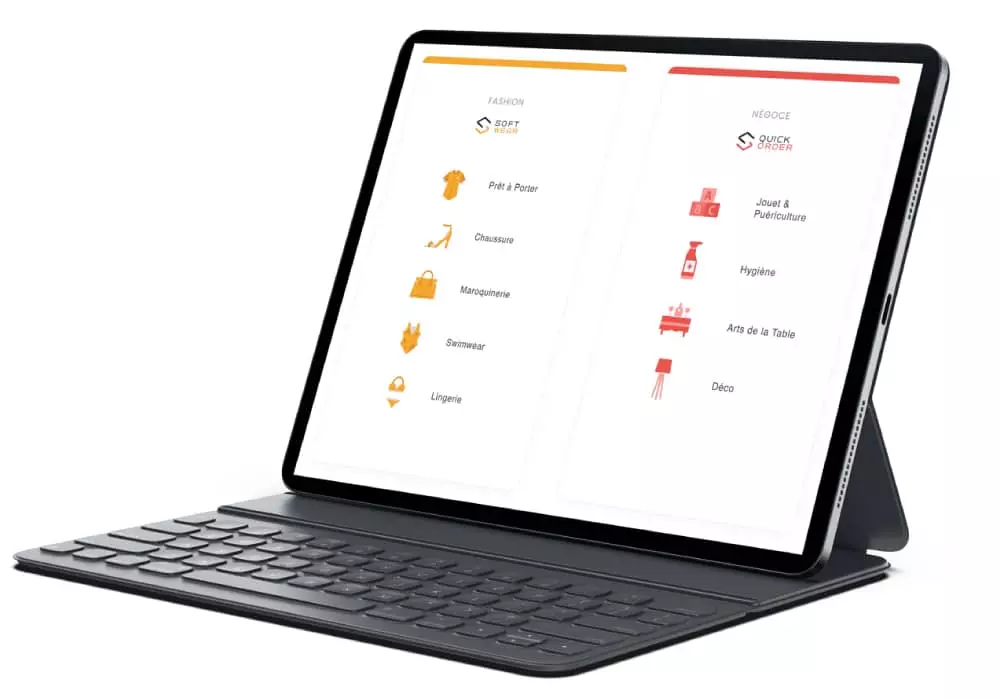
Digital tools allow your salespeople to enrich their pitch by accessing interactive visual materials directly on their tablet, such as videos or dynamic presentations. The result: a tailor-made pitch, adapted presentations, and a positive first impression.
- Optimized route planning
Besides preparing time slots for telephone prospecting, planning sales routes requires good organization to chain as many visits as possible while limiting travel costs and time. Optimizing the route plan can quickly become a headache.
Some order-taking applications integrate geolocation and planning tools that help your salespeople organize routes according to prospect locations and priorities, maximizing visits while reducing travel time and costs.
2. During prospecting: turn every contact into an opportunity
Once in the field, the goal is to maximize the impact of every interaction with prospects.
Digital tools play a central role here in making your salespeople more reactive and professional.
- The digital catalog: a key tool to attract buyers
The digital catalog is an essential asset to present your products impactfully, including:
- Inspiring and immersive content to help your salespeople capture the prospect’s attention from the first interaction: high-resolution photos and videos to tell your brand story to prospects and highlight your products (360° views, multiple angles, in various usage contexts)
- Enriched and dynamic product sheets with real-time updated information: main features, pricing, packaging…
- Detailed information, including technical specifications or product availability
These tools help prospects engage by allowing them to easily envision using your products.
- Responding to needs in real time
Is your prospect interested? Equipped with a mobile SFA app, your salespeople can generate personalized quotes on their tablet via ultra-fast input, while checking product availability in stock through data synchronization linked directly to your ERP. In case of stockouts, the tool automatically suggests substitute products.
Once the prospect is convinced, your teams can finalize the transaction directly on-site with electronic signature, allowing immediate transmission of the order to headquarters.
This reactivity makes the difference, ensuring no sales opportunity is missed.
- Adapting to field contingencies
The field often brings surprises: last-minute cancellations, rescheduled appointments, urgent tasks that disrupt your salespeople’s organization…
Some connected applications help your salespeople manage these unexpected events and reorganize their day, recalculating routes in real time or suggesting immediate alternatives (like new nearby prospects or clients).
This flexibility allows your sales team to remain effective even in the face of unforeseen events.
- Synergy between a B2B e-Commerce showroom and a mobile order-taking app
Some brands integrate dedicated access for their sales representatives on their web platforms (or B2B showrooms). This complementarity makes it possible to supplement the field approach with a remote approach and to diversify interactions with prospects, particularly those who would not be available for a face-to-face meeting but who remain open to an initial video exchange, for example, or to a follow-up.
The platform allows your salespeople to send complementary commercial proposals to prospects, which can be enriched and personalized based on knowledge gained in the field, another way to maintain contact, nurture the relationship, and potentially convert prospects.
3. After prospecting: Analyze actions and manage follow-up
Prospecting does not end after the meeting or contact.
Digital tools facilitate follow-up and performance analysis, essential to learn and adjust strategies.
- Data collection and enrichment
The CRM allows recording all information gathered during the exchange: prospect record enrichment, meeting notes, expressed interest, objections raised, follow-ups to schedule.
This data enables sales and marketing teams to target prospects effectively and refine the sales pitch according to the prospect’s needs and preferences.
- Effective follow-up
Follow-up is a key lever to help your salespeople convert prospects into clients. SFA applications simplify prospect follow-up by scheduling reminders in the agenda, ensuring no opportunity is missed. Timely follow-ups with the right message significantly increase the chances of success.
- Performance analysis
Collected data is then analyzed to measure performance (contact rate, number of meetings conducted, conversion rate, sales achieved…). These analyses help identify strengths and areas for improvement to optimize future prospecting campaigns.
Field prospecting, although complex, becomes smoother and more effective thanks to digital tools. From preparation to analysis, they support your salespeople at every stage to help them achieve their goals daily. Investing in these solutions gives your teams the means to perform in a constantly evolving B2B environment.