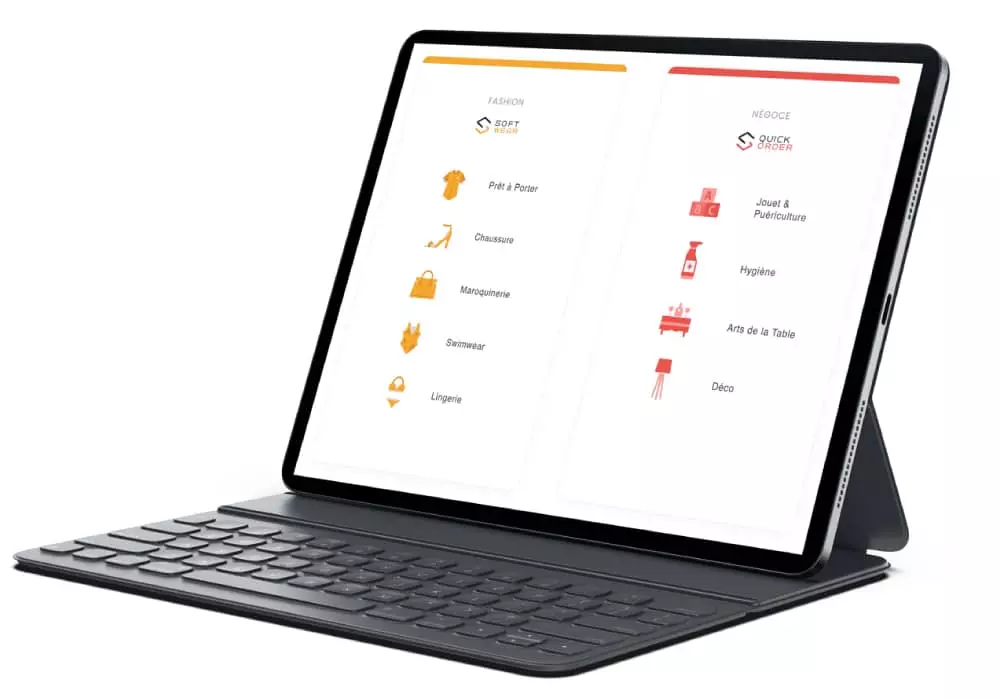

Fashion is a key economic sector. For example, just in France, it generates an estimated €15 billion in revenue, 58% of which comes from international markets. The industry covers a wide range of activities, including ready-to-wear, footwear, lingerie, swimwear, sportswear, leather goods, and fashion accessories.
To remain competitive in a constantly evolving market, fashion brands face numerous challenges, particularly in providing a seamless buying experience for their distributor clients. This requires optimizing ordering processes with a solution tailored to the fashion industry, including managing and presenting new collections, accounting for seasonality, anticipating trends, and managing inventory. These challenges are even more critical given the increasing expectations of professional buyers, especially regarding personalized offerings.
In this context, B2B e-commerce platforms are an effective solution for optimizing sales. However, it is essential to choose a solution that meets the specific needs of the fashion sector, such as Softwear by SCJ, a platform exclusively dedicated to fashion.
1. Challenges for fashion brands and their retailers
- Managing seasons and collections
The fashion industry operates on a continuous renewal cycle, with new collections released each Spring/Summer and Autumn/Winter season. Brands often market their new models six months to a year in advance, even before production. This requires a different commercial management approach compared to traditional channels.
Each model comes in multiple colors, sizes, and materials, making product management complex and prone to errors.
Seasonal (or launch) orders focus solely on new collections, while replenishment orders deal only with stock items from previous collections. These two approaches correspond to distinct B2B purchasing journeys with different needs and goals.
- Trend forecasting and volume planning challenges
Predicting future consumer demand is a major challenge for fashion brands, involving significant uncertainty and financial risk. Poor forecasting can result in excess inventory that is difficult to sell, or stockouts of highly demanded items, directly impacting sales.
Without proper tools, it is difficult for brands to analyze their distributor orders effectively.
- Presenting new collections without final visuals
Effectively showcasing new collections and providing attractive visual materials has become essential for B2B sales.
However, fashion brands often need to sell new collections without final visuals. Models may not yet be produced, requiring brands to use sketches or samples in place of photos, complicating distributors’ purchasing decisions.
- New season and restocking orders : 2 key challenges for physical stores
New season and restocking orders represent major challenges for retailers, especially for brick-and-mortar stores.
New season orders are risky : stores may invest thousands of euros months in advance without certainty of future sales. They must select the right assortment and quantities while anticipating trends. In fashion, with short-lived collections, misjudgments can result in excess stock or popular items running out, directly affecting profitability.
Restocking ensures continuous product availability in stores, preventing missed sales opportunities. Lack of accurate, real-time inventory information can hinder this process.

- Segmentation of B2B offers
Just like in B2C, B2B clients expect a smooth and intuitive shopping experience, but with features tailored to their wholesale activities.
They also want personalized advice and offers, adapted to their store, preferences and needs, with customized recommendations.
Managing B2B offers is more complex, particularly in terms of pricing, with discounts that can vary based on negotiated terms, order volumes or customer loyalty.
- Ordering process
For brands that have not yet embraced digitalization, taking orders by email or phone can lead to errors, delays, and long processing times, all of which contribute to buyer dissatisfaction
For those that have adopted digital tools, multiple sales channels require proper digital solutions to ensure data synchronization, reliability and correct allocation of items in the right sales channels.
2. Benefits of a B2B e-Commerce platform
- The importance of an “industry specialized” platform
To meet the specific requirements of the fashion industry, a general B2B e-commerce platform is not always sufficient. An industry-specific solution, designed specifically for fashion, incorporates features adapted to seasonal cycles and collections.
Equipped with a powerful back-office, a fashion-dedicated B2B platform allows products to be organized into families, making it easier to structure collections by season, manage assortments, and navigate by category, look, or theme.
The platform also takes into account distinct purchase paths between seasonal launch orders and restocking orders, differentiating product displays and ordering conditions: for example, new collections available for pre-order with deferred delivery times on one hand, and in-stock items available immediately for express restocking on the other hand.
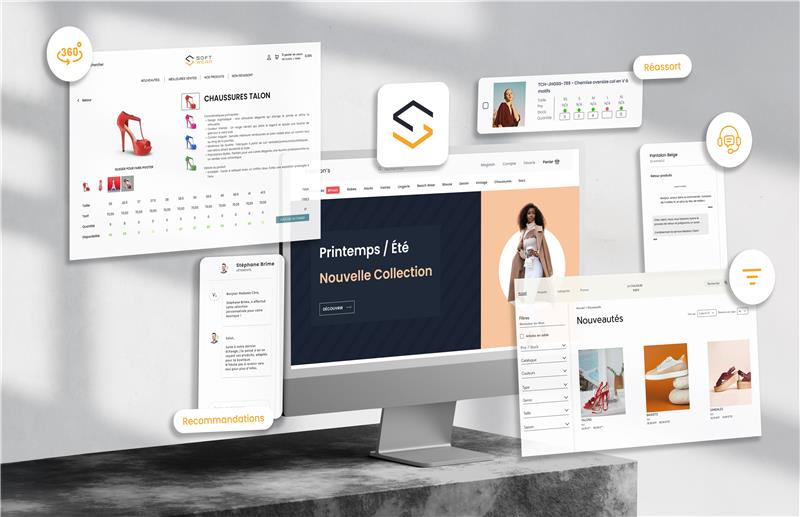
Designed to meet fashion industry-specific needs, it displays each product sheet with an input grid by model, color, and size, simplifying the order-taking process.
A wholesale fashion platform offers much more than just a place to place orders: it provides a virtual showroom where brands can tell their story, share their values, showcase their collections, and inspire their customers with a variety of visual media, including immersive videos, lookbooks, photos of the clothes being worn, and 360° visuals. In the absence of final visuals, items can initially be presented in sketch form, then gradually enhanced using the platform’s optimized back office, which facilitates the immediate uploading of photos and ensures distributors have quick access to up-to-date content.
- Optimizing sales and saving time
With smooth and intuitive navigation, B2B buyers can access up-to-date information on product availability and place their orders more easily at any time, in just a few clicks, without being limited by the brands’ opening hours, thereby maximizing their sales opportunities.
The B2B e-commerce platform is synchronized with the brand’s ERP (Enterprise Resource Planning), ensuring that stock, pricing and commercial terms are always up to date. This integration allows for centralized order management, minimizing re-entry errors and significantly reducing processing times.
Additionally, the platform can interface with a PIM (Product Information Management) system, a key tool for centralizing, enriching, and structuring product information consistently, ensuring reliable data distribution across all sales channels.
Brands thus benefit from optimized information management, enabling better coordination between their sales and marketing teams and providing an enhanced purchasing experience for their clients.
- Personalizing offers
B2B platforms allow brands to tailor their offerings to the specific needs of their distributor clients, with digital catalog displays that adjust according to the client’s profile and negotiated commercial terms, or with restricted access to certain collections or exclusive items.
The platform’s back-office also enables management of complex pricing conditions, taking into account variables such as order volumes, client loyalty or the application of specific discounts under certain conditions. This flexibility ensures even more precise personalization of offers.
Also, platforms often include a resource library, featuring technical sheets and product visuals, to facilitate information sharing between brands and their clients.
- Trend analysis and forecasting for informed decision-making
B2B e-commerce platforms come with built-in analytics tools that enable the generation of precise statistics based on order data.
These statistics allow brands to easily identify their top-selling products and better anticipate the needs of their distributor clients by adjusting their offerings to optimize sales.
Retailers can rely on the order history from season N to help plan for season N+1. This approach allows them to refine their assortments and better secure their forecasts.
By combining these concrete statistical insights with their own experience, brands and their distributor clients can make more informed decisions, thereby minimizing the risks associated with trend forecasting.
- Securing retailers’ risk-taking through tailored services and strengthened relationships
To offset the financial commitment of their retailers, brands also develop services to reduce the risks associated with seasonal launch orders.
Among these, priority access to restocking allows stores to quickly replenish best-selling items, ensuring sales continuity and greater responsiveness to trends.
A more flexible returns management can also be implemented, providing distributors with a certain level of security in case of insufficient sales on specific items.
Integrating a B2B e-commerce platform greatly streamlines these services: retailers can track product availability in real time, trigger replenishments with just a few clicks, and submit return requests easily, without resorting to cumbersome email or phone exchanges.
For brands, the B2B e-commerce platform becomes a true loyalty driver, allowing them to strengthen their commercial relationships with clients through more responsive and personalized support.
3. Discover Softwear: our fashion industry solution
Softwear is a B2B solution specifically designed to meet the demands of the fashion industry. With its dual approach—a web platform for distributors and a mobile app for field sales teams—Softwear provides a comprehensive B2B solution.

- Showcase your collections in a showroom that reflects your brand’s identity and inspire your buyers.
In a digital showroom true to your brand’s identity, offer your buyers an immersive navigation through your universe, where your inspirations come to life with each season.
Let your buyers explore your new collections and help them envision upcoming trends, with navigation by brand, category, or theme (brand pages, moods, lookbooks).
Depending on your sales strategy, manage your clients’ user rights for seasonal launch orders, allowing fully guided, semi-guided or fully autonomous ordering.
- Optimized collection management by season
Whether for seasonal launch orders or restocking orders, the Softwear platform allows you to organize your catalogs by listing items by season. Numerous search filters make it easy to browse models, their variations (style, color, size), and availability, all clearly displayed in Line Sheets, so that all this information is accessible at a glance.
- Simplified restocking for your retailers
In stores, your clients can place their orders online, access up-to-date information on product availability and download the necessary marketing materials (POS, lookbooks, photos and videos) to better showcase your items in-store.
- A powerful tool for sales teams
With the Softwear SFA mobile app, your field sales representatives have an intuitive tool to take orders quickly on their tablets, even offline, while accessing all the information they need (digital catalog, detailed product sheets, client portfolio, order history and outstanding items, sales support materials, etc.).
- A personalized B2B experience
The Softwear platform provides your clients with access to a dedicated space: the catalog display adapts to their profile, needs and negotiated terms. They can track their orders and backorders independently.
The Softwear Commercial Suggestions add-on goes further, enabling the creation of targeted sales recommendations based on your clients’ profiles (store setup, location, purchase history…), for offers that are increasingly personalized and tailored to their needs.
- Boost your sales with integrated e-marketing tools
Drive your sales with integrated e-marketing tools. Highlight your promotions, capsule collections, and collaborations using banners, pop-ups, sliders or carousels to bring your showroom to life, boost the appeal of your products, and capture your buyers’ attention, encouraging conversions.
- Improved after-sales service and returns management
The Softwear After-Sales Service and Returns Management add-on allows you to simplify the management of your after-sales service requests. Your customers create their requests independently via their customer area on the platform and can track their processing status. All your after-sales service requests are centralized in one place to simplify their management and follow-up by your teams. Optimized management with greater customer satisfaction as a result.
- Data analytics
Track your key metrics to gain a comprehensive view of your sales performance and identify top-selling products and emerging trends, turning them into new business opportunities.
- A platform integrated with your ERP for reliable and up-to-date data.
Softwear integrates with fashion brands’ PIM and ERP systems, ensuring product and customer information is always synchronized and reliable.
Reinvent the way you sell your collections with our Softwear fashion wholesale platform!